
Loading...
Serving Wichita Falls, TX and surrounding areas. (940) 298-1103
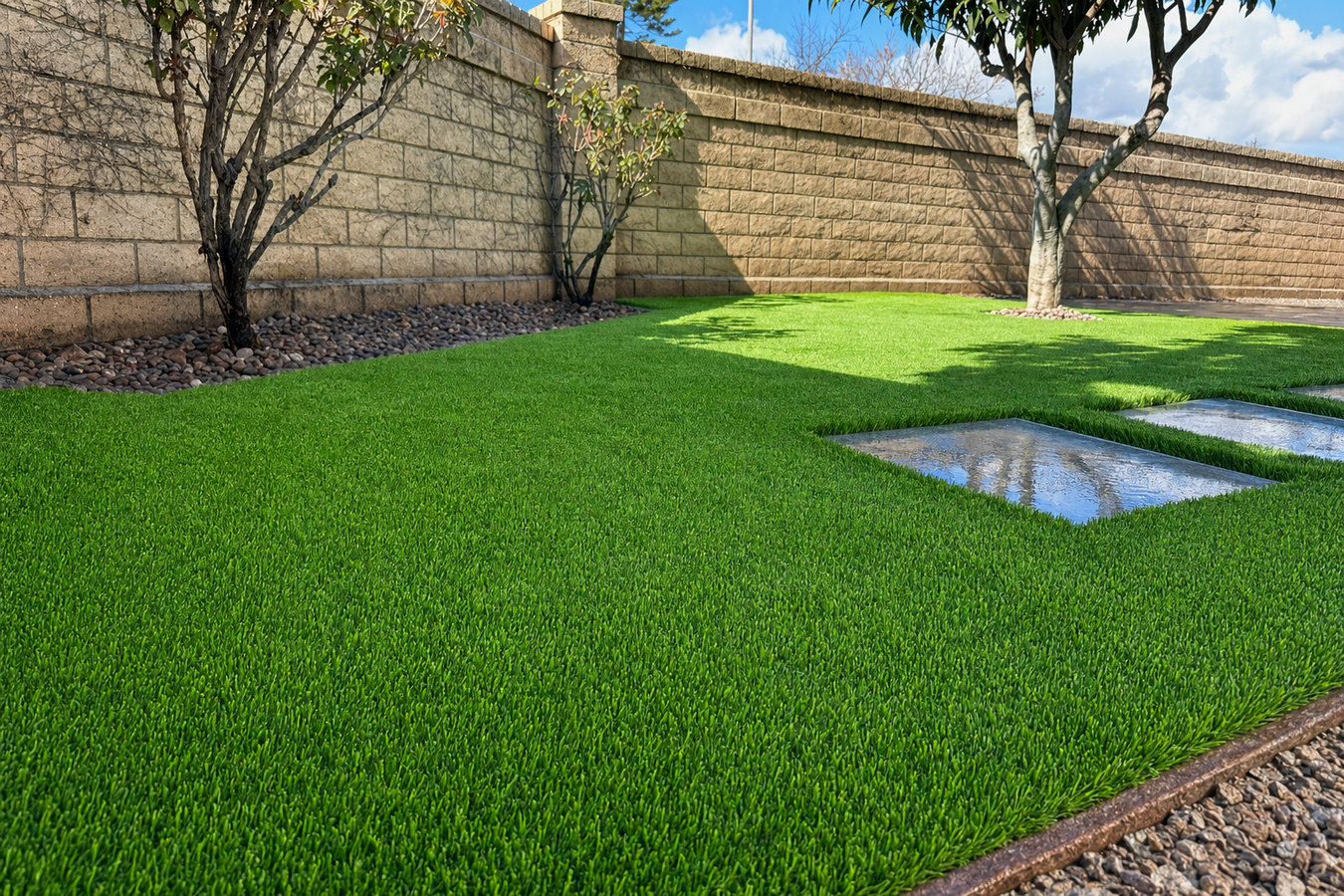
Wichita Falls Artificial Turf Installation brings professional artificial grass installation to Wichita Falls, TX - from drought-tolerant residential lawns and pet-friendly turf to commercial installations - and our team has been serving this city long enough to know what the clay soil and triple-digit summers require from a proper turf job.
Wichita Falls homeowners deal with some of the harshest conditions in North Texas - extreme heat, clay soil that never stops shifting, and a drought history that makes irrigation expensive. Our artificial turf installation is designed for exactly this environment, with proper base preparation and UV-stabilized products built to last here.
The heavy clay soil across Wichita Falls compacts quickly under dog traffic, leaving bare, muddy patches that never come back. Pet-friendly turf installs over a proper drainage base so urine flows through, odors stay down, and the surface holds up to everything your dogs throw at it through every Texas summer.
Ranch-style homes on slab foundations dominate the neighborhoods across Wichita Falls, and most sit on yards that see months of scorching sun without meaningful rain. A residential turf installation gives these homes a lawn that looks the same in August as it does in April, without adding to the water bill that tiered pricing makes expensive.
Wichita Falls made national headlines during the 2011-2015 drought when the city came close to running out of water entirely. That history, combined with ongoing tiered water pricing, makes drought-tolerant artificial turf a practical choice rather than a luxury - water savings here are real and they add up faster than in most Texas cities.
Businesses near Sheppard Air Force Base and along the main commercial corridors in Wichita Falls need landscaping that holds up to heavy foot traffic and stays presentable without daily maintenance. Commercial-grade synthetic turf handles both, keeping storefronts and common areas looking clean regardless of the season or the drought stage.
Wichita Falls winds carry dust, pollen, and debris that settle into turf fibers and require more regular rinsing than homeowners in calmer climates expect. Scheduled maintenance keeps the fibers standing upright, the infill evenly distributed, and the drainage clear so the surface performs the way it did when it was installed.
Wichita Falls presents a combination of challenges that most artificial turf installers from outside North Texas are not prepared for. The clay-heavy soil across Wichita County swells when it rains and shrinks dramatically during dry summer months - this movement stresses the base layer under any turf installation and can cause sinking, pooling, and edge lifting if the foundation work was not done correctly. A contractor who has worked here understands that base depth and compaction matter more in this soil than in most other markets. The city also sits in a region that sees high UV intensity and summer temperatures that regularly exceed 100 degrees, which accelerates fading in lower-quality turf products and makes heat performance a real spec question, not just a sales talking point.
The drought history of Wichita Falls adds another layer of local relevance. The 2011-2015 drought forced the city to implement some of the most aggressive water conservation measures in U.S. history, and the tiered water pricing structure that came out of that period is still in place. For a Wichita Falls homeowner, eliminating lawn irrigation is not just convenient - it cuts a meaningful line item from the household budget every summer. Wind is also a factor here that out-of-town contractors often overlook: the city averages sustained winds that carry debris into turf fibers and stress edge anchoring, so the border and perimeter work on any installation needs to be done with that in mind.
Our crew works throughout Wichita Falls regularly, and we understand the local conditions that affect artificial turf installation work here. For permit-related questions on any project involving drainage changes or grading, we work with the City of Wichita Falls Development Services department, which handles building and site permits for residential and commercial projects in the city.
We install turf across the full spread of Wichita Falls neighborhoods - from the older brick ranch homes in established areas like Tanglewood and Sunset, where mature trees create natural shade that helps with afternoon heat, to the newer subdivisions on the south and east sides of the city where HOA rules sometimes specify color and pile-height requirements. Sheppard Air Force Base sits just north of town, and a portion of the homes we work on belong to military families who need projects completed on a timeline - we understand that and plan accordingly.
Wichita Falls is the largest city in our service area and our home base. Customers in nearby Burkburnett and Iowa Park deal with many of the same soil and climate conditions, and we serve both communities regularly.
Reach out by phone or through our contact form and we will reply within one business day to schedule a visit. There is no charge for the estimate and no obligation to move forward.
We visit your property, measure the area, evaluate the soil and drainage, and walk through your goals. You receive a written quote that breaks down materials, base preparation, and labor - no surprises on install day.
The crew excavates the existing lawn, hauls away debris, grades for drainage, compacts the base, and lays the turf. Most Wichita Falls backyards are completed in one full day, and you do not need to be home the entire time.
Before the crew leaves, we walk the finished area with you, show you the seam locations, confirm drainage is working, and explain care. The turf is ready to use right away - no waiting period.
We serve Wichita Falls and surrounding North Texas communities. Tell us about your yard and we will get back to you within one business day with a free estimate - no pressure, no obligation.
Wichita Falls is a city of about 104,000 people in North Texas, sitting roughly 130 miles northwest of the Dallas-Fort Worth metro. The city grew rapidly during the early 1900s oil boom, which shaped its original street grid and gave it a housing stock that skews older - a large share of homes were built between the 1940s and the 1980s, with a wave of construction following the devastating 1979 tornado that reshaped large parts of the residential landscape. Neighborhoods like Tanglewood, Sunset, and the areas north of Midwestern State University have the feel of established Texas suburbs, with brick ranch homes on mature lots and trees that have been growing for 40 or 50 years. Closer to Sheppard Air Force Base on the north side of the city, the mix shifts toward newer construction and a higher share of rental properties that cycle through military families on rotation.
The city is well known for the annual Hotter 'N Hell Hundred, one of the largest sanctioned century bike rides in the United States, which draws tens of thousands of riders every August and reflects the community's resilience in the face of genuinely hot summers. The man-made waterfall in Lucy Park is another local landmark - built in 1987 after the original falls on the Wichita River were long gone. The economy runs on a mix of oil and gas, healthcare anchored by United Regional Health Care System, retail, and the significant civilian and military employment at Sheppard. Nearby communities we also serve include Burkburnett to the north and Iowa Park to the west.
Professional artificial turf installed to transform your outdoor space year-round.
Learn MoreBeautiful low-maintenance lawn solutions for homeowners in Wichita Falls.
Learn MoreHigh-traffic synthetic turf installations for businesses and commercial properties.
Learn MoreKeep your synthetic lawn looking perfect with expert maintenance care.
Learn MoreLightweight synthetic grass solutions for rooftop decks and urban gardens.
Learn MoreSummer is the busiest season for turf installations in Wichita Falls - the sooner you reach out, the sooner we can schedule your free on-site estimate and lock in your install date.